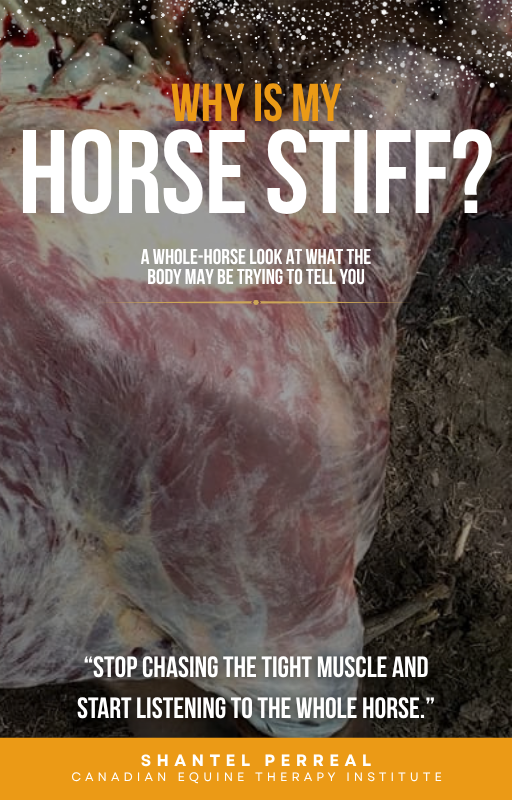
Stiffness is not always the problem itself. This ebook helps horse owners understand how posture, biomechanics, old injuries, saddle fit, and compensation can all contribute to the way a horse moves and feels.
Explore how movement, the nervous system, internal health, nutrition, and the horse’s history can connect in ways that are easy to overlook. Learn to see patterns instead of focusing on one isolated sore or tight area.
Rather than giving you quick fixes or encouraging you to diagnose your horse, this ebook teaches you how to observe, notice changes, and ask better questions of yourself and the professionals involved in your horse’s care.
An Inside Look at the Ebook
Why Is My Horse Stiff? takes a deeper look at stiffness and movement by encouraging horse owners to stop focusing only on the area that feels tight and start considering the whole horse. Across nine chapters, Shantel Perreal explores how posture, biomechanics, saddle fit, previous injuries, compensation patterns, the nervous system, internal health, and nutrition can all play a role in how a horse moves and feels. Rather than presenting stiffness as a diagnosis, the ebook encourages owners to see it as a clue — something that deserves curiosity and further investigation. The book also explores how the body can adapt after injury, how protective movement patterns can continue even after an injury has healed, and why recurring tension may be a sign that something deeper has not yet been addressed. Most importantly, this is not a book about diagnosing your horse or replacing veterinary care. It is about learning to observe, recognize patterns, connect the pieces, and ask better questions. By the end, readers are encouraged to look at their horse differently — not simply asking “Where is the tight muscle?” but “Why is it tight, and what is the rest of the horse telling me?”
About the Creator
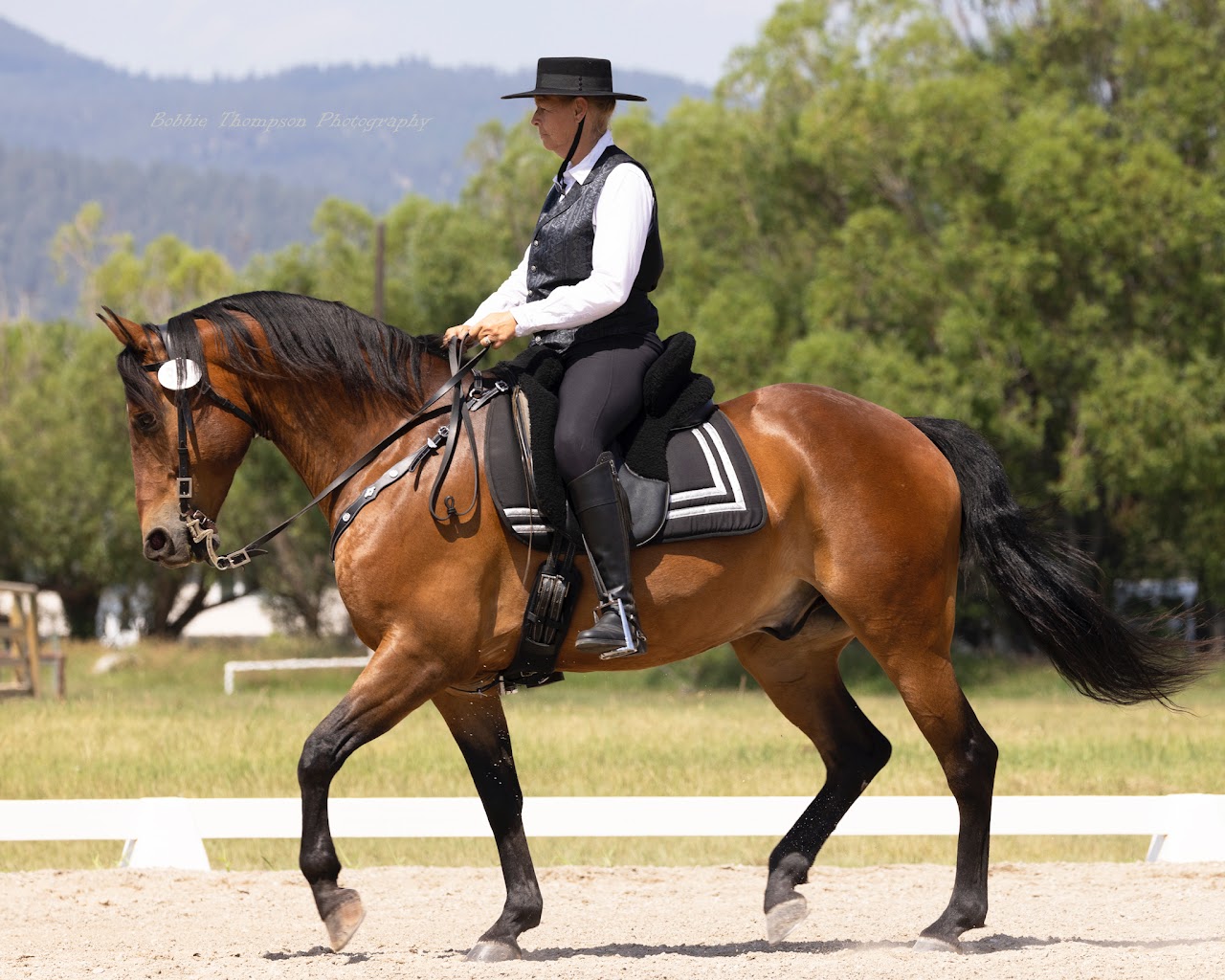
Shantel Perreal is the founder of the Canadian Equine Therapy Institute and has spent roughly two decades working in equine therapy and educating horse owners and students. Her teaching is rooted in anatomy, physiology, movement, nervous-system function, bodywork, and hands-on observation. Through the Canadian Equine Therapy Institute, she teaches the four-year Equine Remedial Therapy program alongside owner education and specialty courses. Her goal is to help people look beyond the obvious and understand how the different pieces of the horse can work together to tell a bigger story.
Stop Guessing. Start Understanding.
Your horse is trying to tell you something. This free guide gives you the knowledge to listen and respond. Download your copy today and discover what your horse's body is really trying to communicate.
Get your free download now